National Disaster Prevention and Response System: Law 21.364 (Chile)
The Challenge: Chile’s institutional framework for disaster risk reduction and emergency response was fragmented. There was no unified national system to coordinate across government levels and align disaster risk reduction with long-term national planning.
Leadership & Implementation
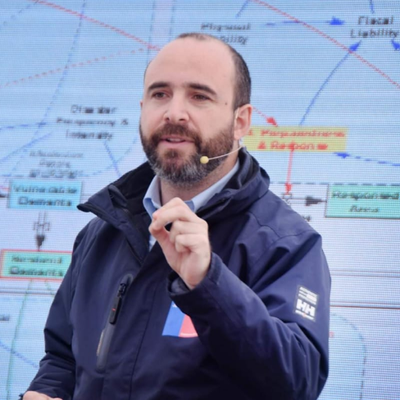
As National Subdirector at ONEMI (Chile’s National Emergency Office), I led the legislative process that resulted in the enactment of Law 21.364, which established the National System of Disaster Prevention and Response and created the National Service of Disaster Prevention and Response.
Key responsibilities included:
- National DRR Policy & Strategy: Led the team responsible for creating and executing the National Policy for Disaster Risk Reduction and the National Strategic Plan for DRR 2020-2030
- Regional coordination: Oversaw the implementation of Regional Platforms for Disaster Risk Reduction across the country
- Innovation & preparedness: Spearheaded innovative projects focused on early warning systems, preparedness, and mitigation
- Crisis management: As acting director, managed response to complex events including earthquakes, wildfires, the COVID-19 pandemic, and landslides
- International leadership: Served as the first pro-tempore President of the PROSUR group for Disaster Risk Management and Sustainable Development, focusing on innovation and infrastructure resilience
- Global engagement: Represented Chile with INSARAG (International Search and Rescue Advisory Group), UNDAC (UN Disaster Assessment and Coordination), APEC Emergency Preparedness Working Group, and the OECD High-Level Risk Forum
Impact
Law 21.364 transformed Chile’s institutional approach to disaster risk reduction. The law created binding obligations to integrate disaster risk reduction into government planning and budgets, clarified institutional roles and coordination mechanisms, and positioned Chile as a regional leader in systemic disaster risk management. Government continuity planning now explicitly incorporates resilience and disaster risk reduction at all levels—national, regional, and municipal.
Transforming your national disaster risk reduction system? Reach out to discuss policy development, institutional reform, and strategic planning.
 4DRR.com