Resilience and Climate Change Adaptation

Fostering community resilience and introducing adaptation initiatives to withstand and reduce the impacts of Climate Change are essential to sustain livelihoods.

Catholic Relief Services (CRS)

Technical Advisor on Resilience, Disaster Risk Reduction, and Food Security for Latin America and the Caribbean. 2023-Today

We are working with the NGO Catholic Relief Services to provide technical advise and develop a strategy to strengthen their work, mainly in Central America and Haiti, on resilience, disaster risk reduction, and food security.

News

Here we share news on our current projects and activities around the globe.

Understanding Risk 2022. Florianopolis, Brazil.

We participated in the Understanding Risk Global Forum organized by GFDRR during the last week of November as part of the Emergency Preparedness & Response Global Program of GFDRR and The World Bank.

©Cristóbal Mena

In this forum, we had the chance to discuss the latest research, innovative projects, and emerging ideas in disaster risk management with academics, policymakers, the private sector, community organizations, and development partners to share knowledge and foster non-traditional interactions and partnerships.

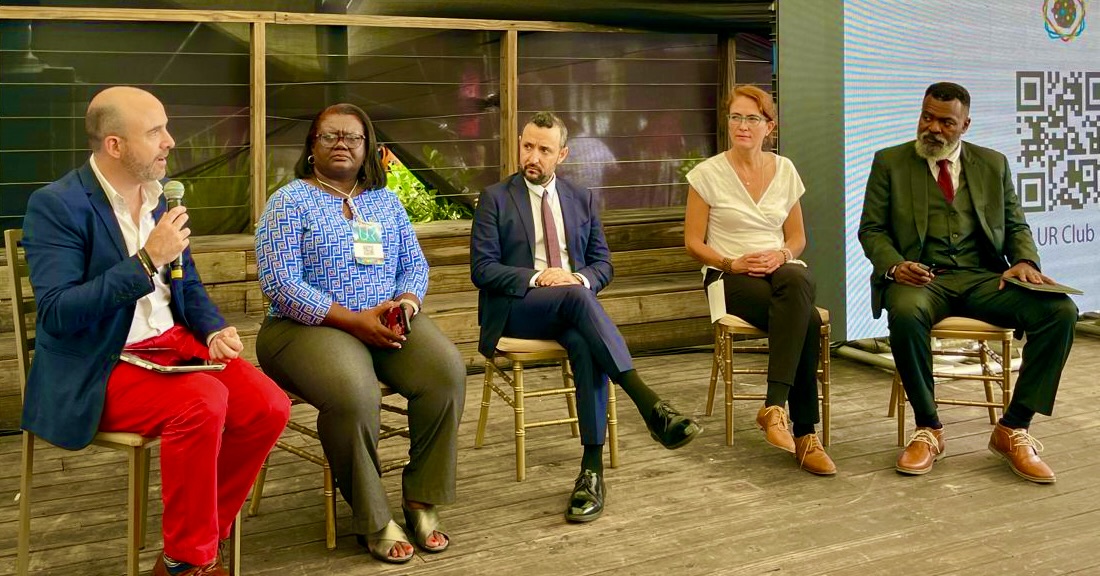
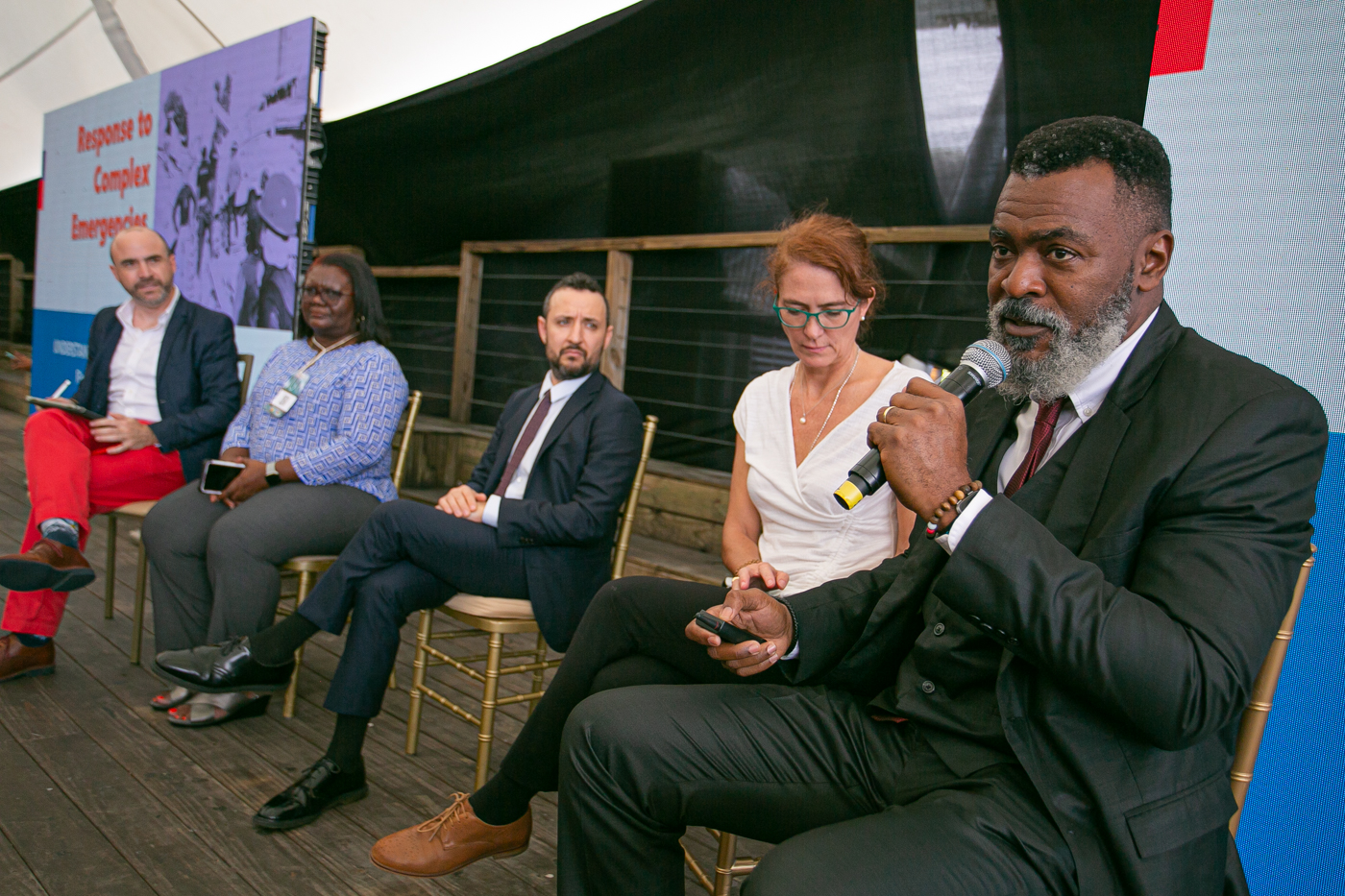
We also moderated the technical session “Building a Culture of Preparedness” with the heads of the disaster risk management agencies of Saint Vincent and The Grenadines and Haiti; and experts from the World Bank.

In this session, we discussed the importance of multi-agency collaboration, local-level capacity building, and community engagements. We also shared experiences, including lessons to be learned from engagements in the Caribbean and what teams learned from COVID-19 and disasters during the pandemic period.

©Constanza Schmipp

As part of the Emergency Preparedness & Response Global Program, we also supported the organization of a workshop on how to better design and manage Emergency Operation Centres (EOCs). This activity covered this critical infrastructure’s functions, requirements, design, and management. In addition, the participants shared and discussed different EOC facilities and approaches across the World, as well as the essential and desirable features of EOC facilities and challenges that would need to be addressed in operationalizing them, including SOPs, personnel, and ICT.

Emergency Preparedness & Response

Building an efficient and effective capacity to respond to emergencies, but most importantly, to prepare and reduce disaster risk, is paramount for sustainable development.

The World Bank and the Global Facility for Disaster Reduction and Recovery (GFDRR)

Emergency Preparedness & Response Global Program. 2022-Today

We are working with the World Bank and GFDRR to support the EP&R and the Health Systems Resilience Global Programs in assessing and building government capacities to prepare for and respond to emergencies.

We are currently:

  • As part of the Emergency Preparedness & Response Global Program team of GFDRR, we are updating the Ready2Respond (R2R) tool, incorporating government continuity planning indicators and fragility/conflict/violence sensitivities (FCV)
  • Developing a diagnostic tool to assess existing country mechanisms for fostering resilient health systems as part of the Climate and Disaster Risk Management for Health Systems program team, also in GFDRR.
  • Expanding the Frontline scorecard tool to evaluate a country’s legal and regulatory framework, policy instruments, capacity, and other critical enabling factors like digital platforms.
  • We are also reviewing and updating the roster for new individuals and firms that can apply the R2R tool.
  • Additionally, we are updating communication materials to brand and position EP&R Global Program’s work.

World Food Programme

Colombia Country Office EP&R Strategy. 2021-2022

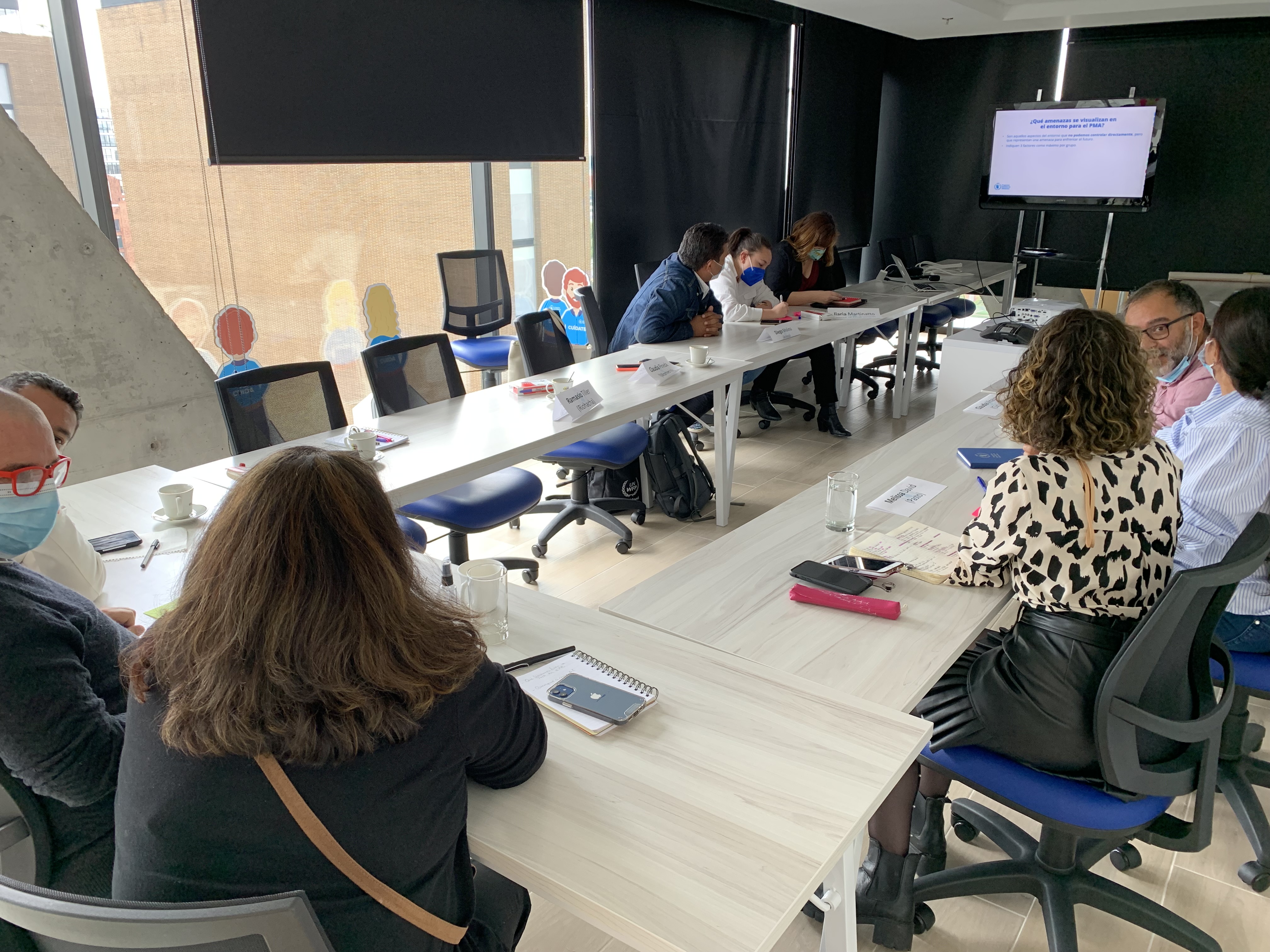
For six months, we had the opportunity to work in the beautiful and challenging Colombia for the World Food Programme Country Office in Bogotá.

During this consultancy we:

  • Provided practical, strategic, programmatic, and operational support and guidance to the leadership of WFP Colombia on Emergency Preparedness and Response (EP&R) and Climate Change Adaptation (CCA)
  • Provided practical, strategic, programmatic, and operational support and guidance to the leadership of WFP Colombia on Emergency Preparedness and Response (EP&R) and Climate Change Adaptation (CCA)
  • Designed a mid-term strategy for the WFP Country Office to jump-start EP&R capacities, foster partnerships with national stakeholders, and negotiate updated protocols and working methods, particularly with the Colombian Disaster Risk Management Agency.
  • Sat the pillars for establishing minimum information management and early warning capacity linked to national information flows within the situation room of the Country Office’s new premises. It included establishing SOPs for information flow with other agencies and national and international actors, including alert systems at a national level.

We would like to thank the Colombian WFP for trusting in us and giving us such a warm welcome!

Government Continuity Planning

We have extensive experience and deep knowledge of the best practices, standards, and regulations to ensure proper government continuity planning, particularly at the municipal and local levels.

World Bank

Thessaloniki Municipality Government Continuity Plan and Resilience Strategy 2016-2017.

Thessaloniki has a rich history as a major hub of business and culture, from the Roman period to the Byzantine Empire. Today it remains an important metropolitan region for Greece, with an active port, a respected university, and robust tourist industry.

The municipality of Thessaloniki, the second largest in Greece, is part of the 100 Resilient Cities Network. In this capacity, the World Bank gave technical cooperation to join in the development of the city’s Resilience Strategy.

@Cristobal Mena

Our work consisted in developing a Continuity Strategy and its respective plan for the Municipality.

World Food Programme Colombia

For six months we had the opportunity to work in the beautiful and challenging Colombia for the World Food Programme Country Office in Bogota.

During this consultancy we:

  • Provided practical, strategic, programmatic, and operational support and guidance to the leadership of WFP Colombia on Emergency Preparedness and Response (EP&R) and Climate Change Adaptation (CCA)
  • Designed a mid-term strategy for the WFP Country Office to jump-start EP&R capacities, foster partnerships with national stakeholders, and negotiate updated protocols and working methods, particularly with the Colombian Disaster Risk Management agency.
  • Sat the pillars for establishing minimum information management and early warning capacity linked to national information flows within the situation room of the Country Office’s new premises. It included establishing SOPs for information flow with other agencies and national and international actors, including alert systems at a national level.

We would like to thank the Colombian WFP for trusting in us and giving us such a warm welcome!

Lessons to Learn After F27

Dear readers I’m sharing this article that I published on the LatAm Insurance Review March 2015.

Lessons to learn after 27-F Earthquake

I often hear the term “lessons learnt” as if the sole act of experiencing a disaster, suffices the whole learning process. I bring this to notice because after the 8.8 Richter earthquake that struck the central part of Chile, on the 27th of February 2010, most of the risk managers or policy advocates declared that lessons were learnt. Well, the purpose of this brief comment after 5 years of this natural event, is to present some of the implications and lessons that Chilean risk managers are learning; after all you never stop learning, right?

First, as context, some facts and figures about this socio-natural disaster. On the economic perspective Chile suffered losses for nearly a 17% of its GDP, which comes to almost US$ 30 billion, of which 27% or US$ 8 billion, where insured mainly in commercial and industrial property. According to a study of the Forensic Medical Service (Nahuelpán & Varas, 2010) there were 512 direct victims of the earthquake and tsunami. The shock of this losses plus the judicial process that still is taking place due to possible neglected actions of the government and the national emergency offices, raised awareness of the need to dramatically improve the way risk was managed in the country.

Before the 2010 Chilean earthquake, risk management was understood mainly in two ways: risk transfer and corrective disaster risk management (UNISDR, 2009). Chief Financial Officers where the key actors in transferring risk at a commercial and industrial level through the insurance market, primarily because risk was understood as financial loss and; on a more radical view, biased by the idea that disasters where unavoidable reflected in the use of the term natural disaster –we will see later that disasters aren’t natural but socio-natural-. Strict constructive standards, influenced by the recurrent seismic activity in Chile, it’s still a stronghold of the way disaster risk is corrected in the country, setting an example that has raised the attention of other earthquake prone nations.

Unfortunately, disaster risk management based on these two pillars, proved insufficient to cope with an event such as the “27F earthquake”; as Chileans name it. Reasons for the former abound and somehow are diffused, I dare to presume this can be explained by the fact that risk management, besides financial risk management, it’s not a professional activity in Chile hence the implications derived usually are sustained in opinions more than in facts and knowledge. This brings my first lesson to learn from this event, the need to implement educational programmes on graduate and postgraduate level. If we want to have CRO’s –in Chile this position practically doesn’t exist in the organizations- managing risks instead of CFO’s, it’s imperative to develop and implement formal studies to manage and raise awareness of risk management.

I’ve always believed you should lead by example. Under this premise, something that became evident after 27F, and hasn´t been tackled, is the lack of Business and Government Continuity Plans particularly in public owned companies. There´s a huge space for improvement in this topic, therefore I believe the government should act decidedly to adopt and implement BCP’s for their companies, leading by example on this critic issue.

Finally, the most important lesson to learn from this experience is the need for better public-private cooperation and synergy in risk management topics. There’s a lot of experience and resources –physical and intellectual- allocated on the private sector that, without doubt, could improve the way the government and vice-versa could reduce risk and vulnerabilities in the Chilean society.

Ulrich Beck, who recently passed away, left us with a final reflection about the emancipatory side effect of global risk (Beck, 2015), this means that we should see the positive side effects of bads. Let me rephrase it, every crisis it’s an opportunity. Therefore, I’m a firm believer that after 5 years from one of the biggest earthquakes measured by mankind, the role and trade of managing risks still has a big opportunity to keep improving the way we deal with socio-natural disasters.


Bomberos enfrenta un mayor riesgo de contraer ciertos tipos de cáncer

Hola! Quería compartir con ustedes un artículo que escribí el año 2010 sobre la incidencia de cáncer en bomberos y algunas medidas de prevención, el qué fue publicado en una iniciativa que tuvimos un grupo de amigos de hacer la primera revista online de bomberos en español, lamentablemente no prosperó.

Bueno, acá les dejo el artículo de un tema que muy lentamente (ya han pasado 6 años y aún no hay gran conciencia) está siendo considerado en bomberos.


Sin dudas que el quehacer bomberil trae una serie de riesgos inherentes, muchos de los cuales son percibidos a diario como  son el riesgo a quemarse, sufrir caídas, ser aplastado por un derrumbe, etc. Pero existen otros riesgos que no son tan evidentes y cuyos efectos dañinos se manifiestan a largo plazo, es el caso de la exposición a una serie de elementos químicos que se desprenden en la combustión de enseres y partes estructurales como bencenos, furanos, PCB’s y muchos otros que, como se ha probado, aumentan significativamente el riesgo a contraer ciertos cánceres.

Esto fue comprobado por un exhaustivo estudio que efectuó la Universidad de Cincinnati, donde demuestra la injerencia del factor bomberil en el riesgo de contraer ciertos cánceres. A continuación está la traducción de la presentación de este estudio, el cual puede ser descargado completo al final de esta página.

Bomberos enfrenta un mayor riesgo de contraer ciertos tipos de cáncer*

CINCINNATI- Investigadores sobre salud medio ambiental de la Universidad de Cincinnati (U.C.) han determinado que los bomberos son significativamente más propensos a desarrollar cuatro diferentes tipos de cáncer que otros trabajadores en otros campos.

Sus conclusiones sugieren que el equipo de protección personal usado por bomberos en el pasado no hacía un buen trabajo en protegerlos contra agentes causantes de cáncer que se encuentran en su profesión, según los investigadores.

Los investigadores encontraron, por ejemplo, que los bomberos eran doblemente propensos a desarrollar cáncer testicular y tenían una significativa alta probabilidad de desarrollar un linfoma de “non-Hodgkin’s” y cáncer a la próstata en relación a los que no son bomberos. Los investigadores también confirmaron descubrimientos anteriores que plantean que los bomberos tienen un mayor riesgo de presentar mieloma múltiple,

Grace LeMasters, PhD, Ash Genaidy, PhD y James Lockey, MD, informan de estos descubrimientos en la edición de Noviembre del “Journal of Occupational and Enviromental Medicine”. El estudio guiado por la U.C. es el más grande y comprensivo estudio a la fecha sobre el riesgo de cáncer asociado a trabajar como bombero.

“Nosotros creemos que hay una correlación directa entre las exposiciones químicas que bomberos experimentan en el trabajo y su mayor riesgo de cáncer”, dice LeMasters, profesor de epidemiología y bio-estadística de la Universidad de Cincinnati.

Los bomberos están expuestos a muchos compuestos designados como carcinógenos por la “Internacional Agency for Research on Cancer” (IARC) Incluyendo benceno, emanaciones de gases de escape diesel, cloroformo, hollín, estireno y formaldehído, explica LeMasters. Estas substancias pueden ser inhaladas o absorbidas a través de la piel y ambas ocurren en la escena de un incendio o el cuartel, cuando de gases de escape diesel se trata.

“Los bomberos trabajan en una ocupación inherentemente peligrosa diariamente” Agrega LeMasters. “Como servidores públicos, ellos necesitan, ellos merecen, medidas de protección adicionales que aseguren que no están en un mayor riesgo de cáncer.”

El equipo guiado por la U.C. analizó información sobre 110,000 bomberos, la mayoría de tiempo completo; trabajadores masculinos caucásicos; desde 32 estudios científicos previamente publicados para determinar comprensivamente los efectos en la salud y correlacionar los riesgos de cáncer de su profesión.

El riesgo para 20 diferentes cánceres fue clasificado en tres categorías; probable, posible o improbable, encuadrado después del modelo de estudio de riesgo de la IARC.

Epidemiólogos de la U.C.  Encontraron que la mitad de los cánceres estudiados; incluidos el cáncer testicular, prostático, de piel, cerebral, recto, estomago y colon, así como el linfoma “non-Hodgkin’s”, mieloma múltiple y melanoma maligno, estaban asociados al quehacer bomberil en variados niveles de aumento de riesgo.

“Hay una critica e inmediata necesidad por equipamiento de protección adicional para ayudar a bomberos en evitar la inhalación y las exposiciones a la piel a conocidos y supuestos carcinógenos ocupacionales” dice Lockey, profesor de salud ambiental y medicina pulmonar de la U.C. “Además, los  bomberos debieran lavarse su cuerpo completo meticulosamente para remover hollín y otros residuos de incendios con el fin de evitar la exposición de la piel.”

El estudio fue apoyado en parte por una donación del “Ohio Bureau of Workers Compensation”. Colaboradores del estudio incluyen a los miembros de la Universidad de Cincinnati Paul Succop, PhD, James Deddens, PhD and Kari Dunning, PhD, así como a Tarek Sobeih, MD, PhD, de la Universidad de El Cairo y Heriberto Barriera-Viruet, PhD, de la Universidad Interamericana de Puerto Rico.

Conclusión y recomendaciones

Como podemos ver hay un gran tema que analizar en nuestras políticas y formas de trabajo, pues así como tenemos soluciones para mitigar ciertos riesgos bomberiles como usar casco, guantes, esclavina, etc. Existen también ciertas recomendaciones para disminuir la exposición a estos químicos.

Quiero dejar finalmente algunas recomendaciones para evitar o disminuir las exposiciones. Por ejemplo están el uso de Equipo de Respiración Auto-Contenido; incluso en la remoción de escombros, lavar los uniformes cada vez que sean expuestos a gases de combustión, evitar el ingreso de uniformes sucios a espacios de convivencia como guardias nocturnas, extraer o filtrar los gases de escape diesel en las salas de maquinas y el ducharse después de cada llamado con fuego.

Espero pues haber generado la inquietud y ojalá el interés por mejorar ciertas condiciones que a largo plazo pueden perjudicar seriamente nuestra salud.

http://healthnews.uc.edu/news/?/3750/ Grace LeMasters, PhD. Ash Genaidy, PhD.  James Lockey, MD. Traducción: Cristóbal Mena A.